
Project control through flow
TaskFlow
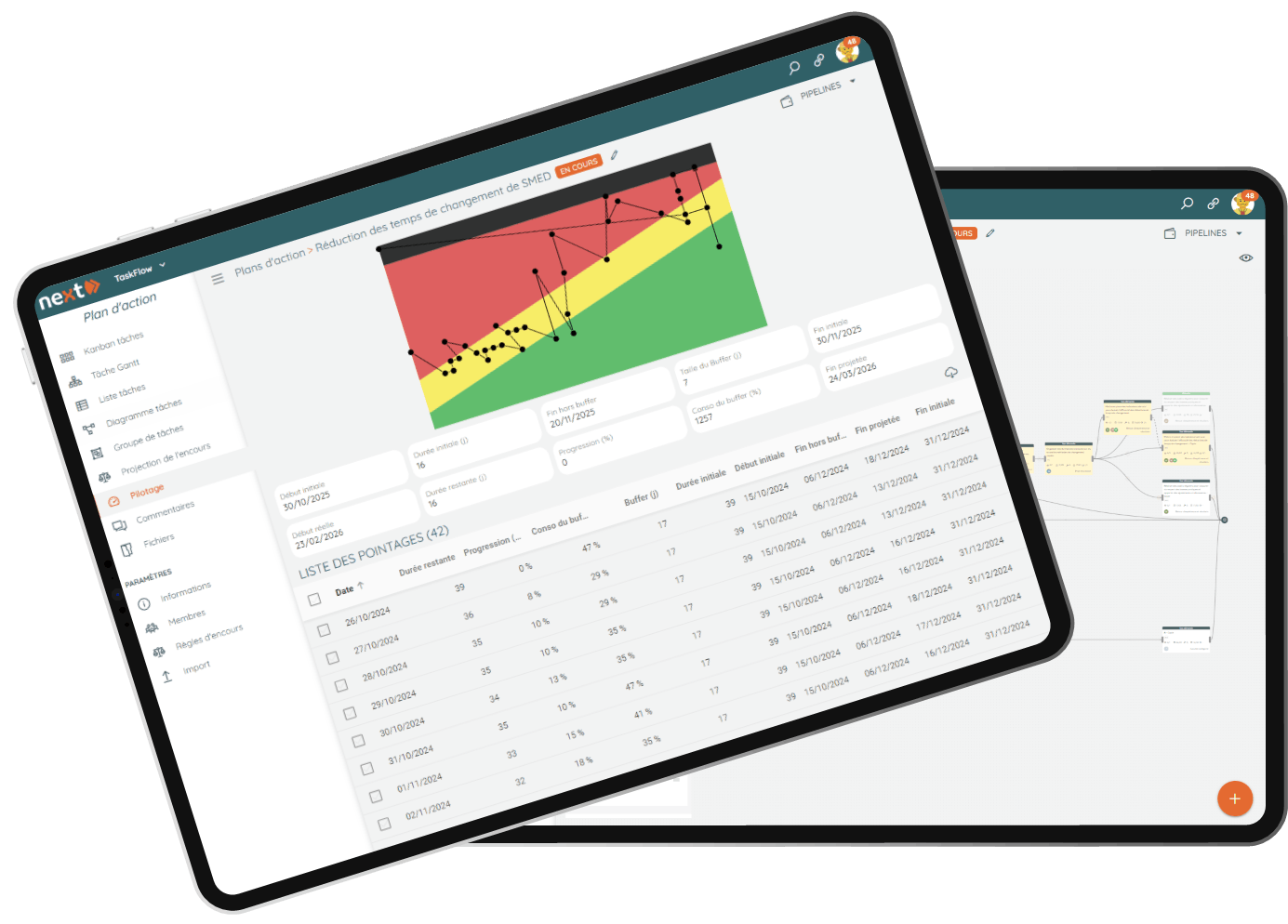
Transform project execution with a flow-based control approach!
Clearer priorities, smarter protection against variability, and a shared view of project health.
The Challenge
Plans are detailed.
Execution is not protected.
Projects suffer from chronic delays and budget overruns despite rigorous tracking. Traditional methods don’t address the real causes.
Everyone busy, nothing done
WIP overload
Work starts everywhere at once. WIP explodes, priorities shift constantly, and completion is perpetually delayed — despite everyone working at 100%.
Multitasking kills throughput
Context switching
People switch between tasks too often, work starts too early, and progress becomes invisible. Each interruption costs 20–40% of productive time.
The constraint is invisible
No shared signal
Teams lack a shared view of what truly drives the end date. Without a clear constraint, every task becomes equally urgent — and nothing is protected.
The Solution
Pilot projects through flow — priorities and protection.
TaskFlow applies Critical Chain (CCPM) to keep execution focused on what matters most: buffer management, constraint-aware priorities, and a single shared health indicator for the whole team.
How it works
One clear rule. One shared view. Better decisions.
- ✓Prioritize tasks by buffer consumption — reduce noise and context switching
- ✓Buffers absorb uncertainty and make project risk visible early — no more hidden safety in each task
- ✓Identify and plan around constrained resources — where reality hits first
- ✓One Fever Chart gives every stakeholder the same health signal — green, yellow, red, or black
- ✓Compatible with any industry: R&D, NPD, engineering, portfolio management
Traditional vs. TaskFlow
Traditional
Hidden safety in each task
Re-planning every week
Priorities by who shouts loudest
No shared health signal
Multitasking everywhere
TaskFlow
Pooled, visible buffers
Execution by buffer consumption
Priorities from facts, not noise
One Fever Chart for all
Finish before starting
Inspired by Theory of Constraints — Goldratt (CCPM)
Key features
Flow-based control, made practical.
A small set of views and rules that teams can use every week — without adding complexity.
Fever Chart — One chart.
One shared truth.
Real-time project health indicator linking critical chain progress to buffer consumption. Every stakeholder gets an immediate, unambiguous signal — green, yellow, red, or black.
Buffer management
Pooled protection against variability. Visible risk. Early warning built into the flow — not hidden in individual tasks.
Constraint-based planning
Sequencing and prioritization around the constrained resource. Plan where reality hits first.
Network diagrams
Identify prerequisites to avoid premature starts and limit multitasking. Map the logical flow of your project.
Project pipeline
Instant portfolio overview with multi-project health views. Limit WIP at portfolio level — see all projects at a glance.
Remaining-duration tracking
Track based on remaining duration, not % complete. More actionable, less biased — see drift earlier and take action before it's too late.
Visual project health indicator
Fever Chart — See your project status at a glance
A single chart connects critical chain progress with buffer consumption. Every stakeholder gets an immediate, unambiguous health signal. No spreadsheets, no ambiguity — one shared view to drive faster, clearer decisions.
Stay the course
Buffer consumed slower than progress. Project is healthy — maintain pace and secure Full Kits.
→ Maintain · prepare · stabilize
Vigilance required
Buffer catching up with progress. Review risks, secure dependencies, prepare options.
→ Review · clarify · prepare
Take action now
Over-consumed relative to progress. Fast, shared management decision required.
→ Arbitrate · protect · escalate
Critical situation
Buffer ≥ 100%. End date no longer protected — recovery plan required immediately.
→ Scope · capacity · recovery
Predictability improves when execution is protected.
Typical outcomes observed in CCPM deployments — context and adoption discipline determine results.
Lead-time reduction from reduced multitasking
Team stress and last-minute emergencies
On-time delivery and predictability
Clear execution rule for the whole team
Results depend on scope, context, and adoption discipline. No guarantees — real deployments confirmed by clients.
Adoption & support
SafeFlow — The deployment package that makes it stick.
TaskFlow is supported by the SafeFlow package delivered by AGILEA: training, coaching, and facilitation. A tool alone is not enough — SafeFlow turns implicit rules into repeatable rituals.
Why a tool alone is not enough
Execution performance depends on implicit rules: when to start work, how to change priorities, when to escalate. No software enforces these by itself. SafeFlow makes them explicit.
- ✓Turns implicit WIP rules into explicit, shared team rituals
- ✓Coaching & facilitation to anchor practices on the ground
- ✓Compatible with Lean / CI / supply chain mindsets
- ✓Stable decision governance — fewer political priority battles
How a SafeFlow deployment works
- 1Discovery day (option) + framing & diagnostic
- 2Network mapping, constraint identification, buffer construction
- 3Rules + rituals definition (weekly project and portfolio)
- 4TaskFlow configuration + pilot launch
- 5Coaching & facilitation to anchor practices in the team
5 rituals that SafeFlow puts in place
Weekly health review
Fever Chart + buffer focus — every week, without exception.
Execution priority arbitration
Finish before launching. Prioritize by buffer consumption, not urgency.
Full Kit ritual
Secure all prerequisites before starting any task — zero premature launches.
Portfolio review
Pipeline + WIP review to limit multi-project multitasking and stabilize priorities.
Escalation ritual
Red zone: fast, shared, tracked decision — escalate early, decide together.
Discovery day — by the game
Experience the logic before rolling it out
A discovery day "through the game" makes teams live the flow principles — multitasking effect, buffer logic, priority arbitration. Fastest way to build buy-in before a pilot.
Success stories
Teams that transformed their project execution.
"TaskFlow changed the way we steer projects. Delivery became faster and decisions became simpler thanks to a shared health view (Fever Chart)."
"The SafeFlow rituals are what made the difference — the tool works, but having the weekly review and escalation ritual in place is what changed behavior."
"We reduced our project lead times by 35% in the first year. The buffer visibility and Fever Chart gave management a language everyone understood."
Inspired by Goldratt
From The Goal to TaskFlow — the same logic applied to projects
If Goldratt’s Theory of Constraints resonates with your supply chain mindset, you’ll recognize the same thinking applied to project execution: make flow visible, protect the constraint, reduce multitasking.
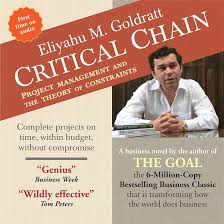
The reference book
Critical Chain — E. M. Goldratt
The founding novel of the CCPM method. Essential reading to understand why traditional project management chronically fails — and how to fix it.
Find the book →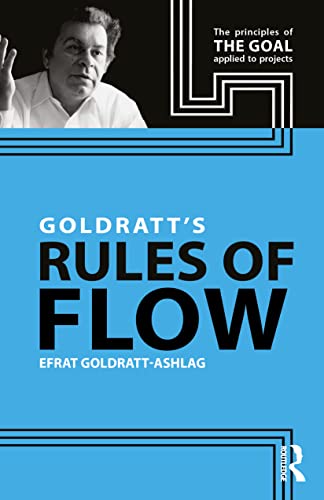
Related book
Goldratt's Rules of Flow — E. Goldratt-Ashlag
A modern, practical take on flow principles for project management. Extends the Critical Chain legacy with accessible frameworks for today's complex organizations.
Find the book →Free resource
Our white paper on flow-based project management
Key concepts of TaskFlow in a concise, practical format: Critical Chain, buffers, Fever Chart, and a 5-step deployment roadmap.
- ✓What is Critical Chain and why it matters
- ✓How buffers protect your project end date
- ✓Reading and using the Fever Chart in practice
- ✓5-step deployment roadmap
Video Series (English content)
The Rules of Flow
Discover the fundamental principles to eliminate bad multitasking, synchronize your resources and drastically reduce your lead times.
▶ Register to watch the 8 videos (free)FAQ
Frequently asked questions
About TaskFlow (the tool) and SafeFlow (the management package).
FAQ TaskFlow (the tool)
What exactly is TaskFlow?
TaskFlow is a flow-based project management tool, inspired by Critical Chain (CCPM): buffers, Fever Chart, multi-project views and simple rules to make project health visible and drive faster decisions.
Who is TaskFlow for?
TaskFlow is designed for industrial project managers, R&D, new product development (NPD), PMOs and portfolio management — especially when critical resources are shared and unstable priorities slow down execution.
Does TaskFlow replace a Gantt / re-planning tool?
No. TaskFlow is not focused on constant re-planning. It is used to manage execution through a health reading (buffers + Fever Chart) and more stable priority arbitration.
What is a Fever Chart?
A Fever Chart links critical chain progress with buffer consumption. It gives a simple health reading (green/yellow/red/black) to orient decisions without over-analysis. One chart — one shared truth.
What is a buffer in Critical Chain (CCPM)?
A buffer is a pooled, visible protection that absorbs variability and protects the end date — instead of hidden margins dispersed across individual tasks.
Does TaskFlow help reduce multitasking?
Yes — because prioritization becomes factual (buffer/constraint) rather than political. This helps limit premature starts, reduce context switching, and increase throughput of finished tasks.
FAQ SafeFlow (the management package)
What is the difference between TaskFlow and SafeFlow?
TaskFlow is the tool. SafeFlow is the deployment and management facilitation package: method, rules, rituals, training, coaching and facilitation to make the practices stick on the ground.
Why is a tool alone not enough?
Execution performance depends on implicit rules (WIP, start decisions, priority changes, escalation). SafeFlow makes these rules explicit and transforms them into repeatable rituals, supported by coaching.
What rituals does SafeFlow put in place?
- Weekly project health review (Fever Chart + buffer focus).
- Execution priority arbitration (finish before launching).
- Full Kit ritual (secure prerequisites before start).
- Portfolio review (pipeline/WIP) to stabilize priorities.
- Escalation ritual (red zone: fast, shared, tracked decision).
Is SafeFlow compatible with Lean / continuous improvement?
Yes. SafeFlow applies the same principles (flow, WIP, simple signals, visual management) to the project world via Critical Chain, buffers and a more stable decision governance.